
What is behentrimonium methosulfate?
Behentrimonium methosulfate (also known as "BTMS" to those in the know) is a cosmetic active ingredient that is very common in conventional, as well as natural and organic, hair care products. Do you use products for dry, damaged, or kinky hair? Take a look at their ingredients: there is a high chance you will find BTMS in them!
Behentrimonium methosulfate is a wax, somewhat like beeswax or carnauba wax. If you come by to visit us at the LAB, you will see that it comes in the form of small, whitish pellets. We then melt them in a bain-marie at a minimum of 55°C before incorporating them into the fatty phase (vegetable oils and the like) of our preparations.
By the way, where does BTMS come from?
Behentrimonium methosulfate is actually composed of two substances:
- a quaternary ammonium (or "quat" for short)
- + a fatty alcohol (cetearyl alcohol).
This is the reason why you will find it on the INCI list of your care products under the following name: cetearyl alcohol and behentrimonium methosulfate
The good news is that BTMS is of plant origin. It most often comes from rapeseed oil. But beware of misconceptions: it cannot be considered a natural ingredient. The reason is simple: it undergoes some so-called "chemical" modifications before it can be used in cosmetics.
But what is this behentrimonium methosulfate used for?
Technically, behentrimonium methosulfate belongs to the large family of surfactants. Basically, it allows the aqueous phase and the oily phase of your care products to bond well together and form what is called an "emulsion." Without a surfactant, fat and water would not be able to mix!
It also has the benefit of being self-emulsifying. In other words, it is sufficient on its own to create beautiful, stable emulsions. Normally, you would need to add other additives to get a decent result (co-emulsifier, stabilizer, acidifier, etc.). Choosing BTMS thus allows us to avoid long, drawn-out formulations with "empty" ingredients that contribute nothing to your hair.
What is the benefit of BTMS for my afro hair?
Behentrimonium methosulfate generally plays the role of a conditioning agent in products like conditioners, masks, or leave-ins. If we love it so much (and our customers do too!), it is because its benefits for kinky hair are undeniable.
- It is antistatic: it prevents your hair from becoming electric and frizzy.
- It has a lubricating action: it facilitates detangling and prevents breakage.
- It is beautifying: it smoothes, coats, and adds shine to the hair fiber.
- It is softening: it leaves the hair silky.
Behentrimonium methosulfate vs. silicones: does it weigh my hair down?
Behentrimonium methosulfate is often compared to silicones. Like them, it forms a film around the hair. This is precisely what allows it to trap moisture in the heart of the fiber, reduce its porosity, and improve the appearance of the hair. It is thus called "occlusive" and replaces the protective function of natural sebum, which kinky hair tends to lack.
Did you know? No ingredient can "suffocate" your hair. Neither BTMS, nor silicones, nor anything else. Because hair, like all integuments, is by definition dead. Therefore, it does not breathe!
However, behentrimonium methosulfate has a major advantage. While silicones deposit themselves on the entire surface of the hair (potentially making it heavy and greasy), BTMS is smart. It adheres only to the most damaged areas. This is because it is cationic, meaning it is charged with positive ions. The weakened parts of your hair are charged with negative ions. And you know the saying: opposites attract. Result: your hair remains supple and light!
BTMS vs. sulfates: is it irritating?
You have probably noticed: "behentrimonium methosulfate" contains "sulfate." Yet, sulfates have a bad reputation. They can indeed be irritating. However, BTMS is not a sulfate like the others! As you now know, it is a conditioner, not a detergent: at no point will it strip the fiber at the risk of damaging it, because that is not its role.
But that's not all! Behentrimonium methosulfate has the advantage of not being an ethoxylated compound. Ethoxylation involves producing a surfactant using a very toxic and carcinogenic gas: ethylene oxide. Ingredients obtained via this process sometimes contain residues of aggressive substances, especially for the skin. It is for this reason that BTMS is infinitely less irritating to your scalp than most "classic" sulfates.
BTMS vs. environment: is it polluting?
Unfortunately, everything is not perfect. The process for obtaining behentrimonium methosulfate is not the most environmentally friendly. The REACH program (which regulates the use of chemical substances) considers that it poses a risk of ecotoxicity for aquatic environments.
Despite this, some of our compositions include a low concentration of behentrimonium methosulfate. Simply because we do not want to make any compromises regarding your health and that of your hair. This is why we prefer it to other ingredients with similar properties, but with a significantly more concerning health and environmental impact. And that doesn't stop us from offering you safe formulas with a maximum of natural ingredients!
| For info: Unlike the majority of quats, such as behentrimonium chloride, the cosmetic use of BTMS is not subject to any European restrictions. |
Want to make up your own mind about behentrimonium methosulfate?
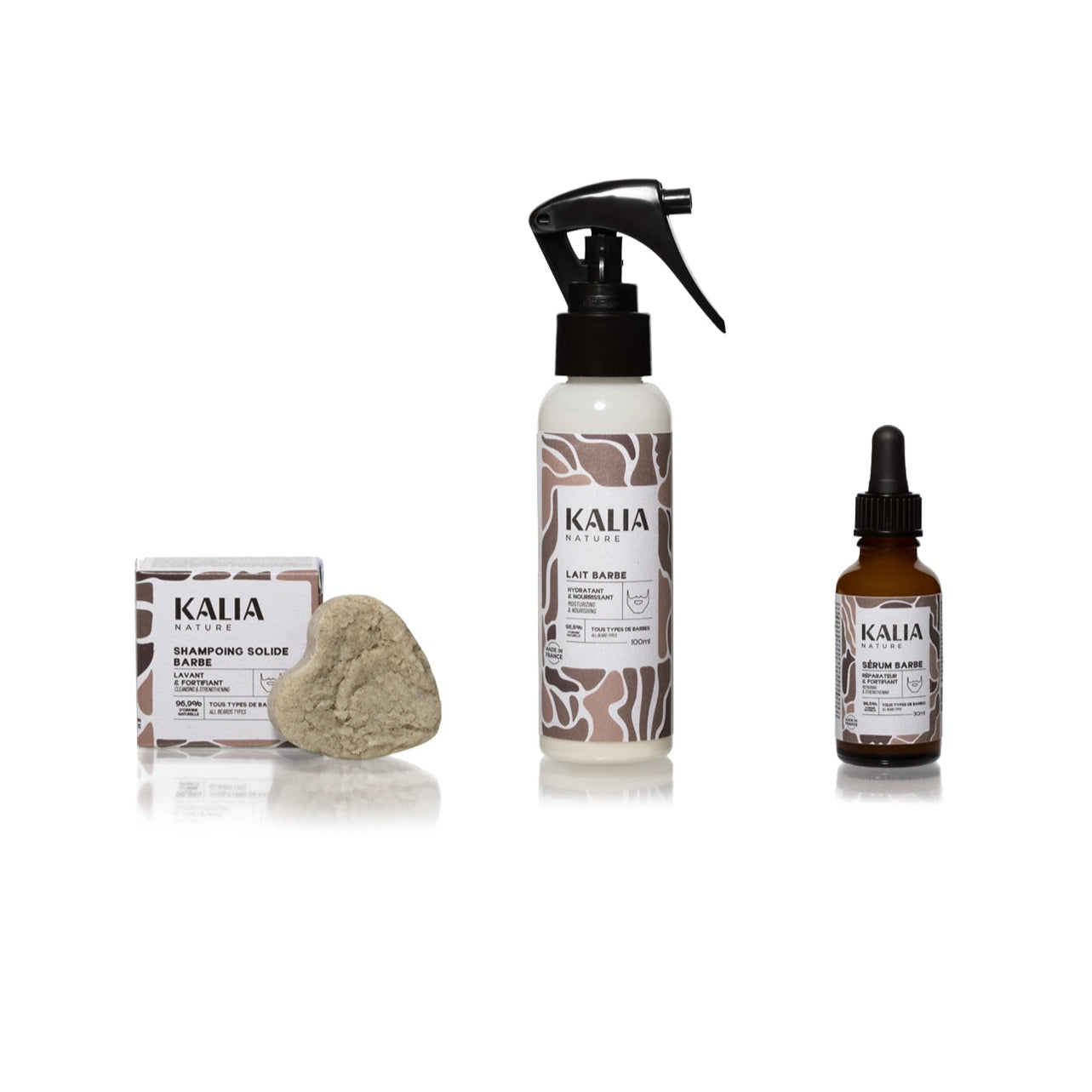
Find behentrimonium methosulfate in 6 cult Kalia Nature products: